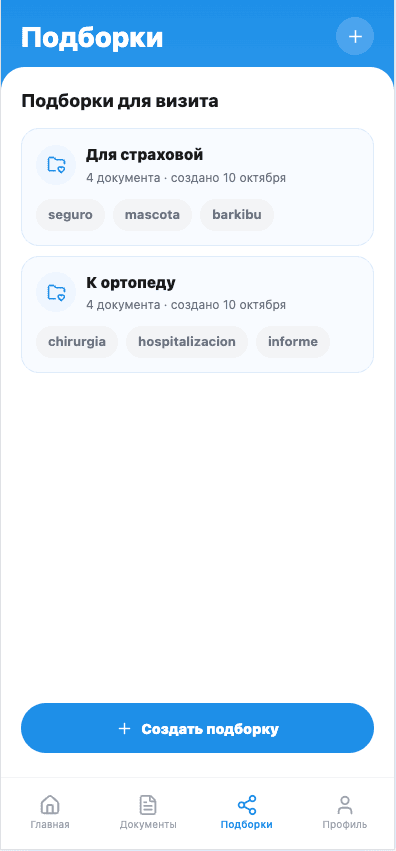
Before seeing a new vet, ask which previous records they need and how they prefer to receive them. Gather the relevant originals, request missing records from the previous practice and prepare a short timeline. An app can organise and share files, but SmallFriendFiles does not retrieve records from clinics automatically.
Ask the new practice first
Practices use different ways to receive documents. Some ask for files in advance; others want you to bring them to the appointment. Establish the format before building your collection.
You can write:
Hello, we have an appointment for [pet’s name and species]. We have test results and reports from another practice. Which documents should we prepare, and how would you like us to send them?
For a specialist consultation, add the reason without making your own diagnosis: “We would like to discuss the examination results from [date].” The receiving vet determines the relevant records, rather than a universal online checklist.
Request missing records
Try this message to the previous practice:
Could you explain how to obtain copies of [pet’s name]’s medical records for [period]? We need the available consultation reports, test results, prescriptions and examination reports to continue care at another practice.
Do not rely only on invoices. They may confirm payment without explaining the consultation. Ask whether original diagnostic images are available and which format the practice uses. Timing, charges and access procedures depend on the practice, circumstances and country; do not assume a universal deadline.
Check the document collection
| Check | Purpose |
|---|---|
| Pet and dates on each record | Avoid sharing another animal’s or another visit’s record |
| All report pages | Keep the full text and signatures |
| Complete laboratory results | Preserve units, labels and source comments |
| Latest prescription and earlier changes | Give the vet the source records rather than a memory-based account |
| Passport and vaccination evidence, if requested | Bring the details relevant to the appointment |
An owner’s note can list appointment dates, the current question and attached documents. Label it as your note, not a clinic-issued report. Say when a date is unknown.
Share the selected originals
Use the method agreed with the practice. In SmallFriendFiles, choose the files and create a collection. A recipient can open its link or QR code without an account; you can also download the collection as one PDF or an archive. That is a sharing method, not a guarantee that every practice accepts links.
The link lasts 30 days and can be revoked earlier. Open the public collection yourself before sending it and check its contents. Originals may include personal details, so select only what the recipient needs.
If the records are in another language
Keep the original unchanged and ask whether a translation is required. A short summary can help you recall the content, but does not replace a full or certified translation or the vet’s assessment. Read the guide to records in another language.
Before leaving, check that files open on your phone and download copies for places without a connection. If the records are scattered, start with a simple document organisation system.